
How is poverty and homelessness portrayed in the media and how is it depicted from a Humanitarian Communication perspective
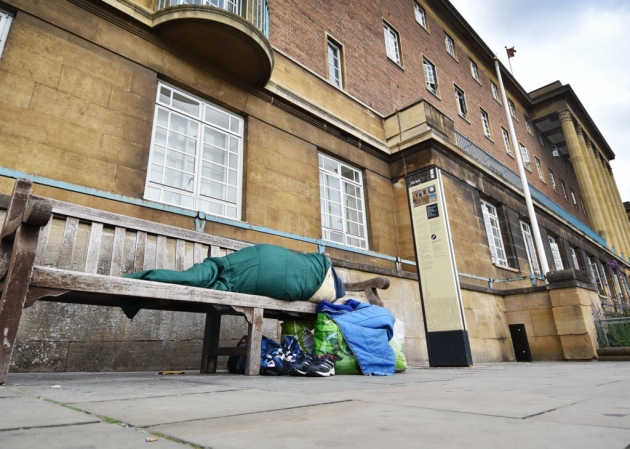
This image shows a homeless man in Norwich sleeping on a bench outside the City Hall in the centre of Norwich with all his belongings in bags next to him. An image that we are very familiar with from the hundreds of different adverts, newspaper articles, social media posts and of course personal experiences, we are reminded of the desperate state the homeless find themselves. The image was coupled with an article by the Norwich Evening News about the attempts of St Martin’s Housing Trust. The article follows a day in the life of a homeless charity and the work they do with regards to trying to reduce the number of people sleeping on the streets. Whilst showing the life saving work they take part in, they are also make reference to the idea, that as a city population, “We’re all just two pay checks away from the streets”.
St Martins state that “they believe that everyone deserves a chance and everyone should be treated with care and dignity” but this attitude is not necessarily shared by everyone due to stigma around homelessness and the pornography of poverty that is exploited in the media .
Pornography of Poverty
In a sentence, pornography of poverty is the ‘worst images that exploit the poor for little more than voyeuristic ends’. This essentially says that there are images and media created for peoples enjoyment from seeing the pain and distress in poverty and squalor. People are portrayed as helpless, passive objects in order to elicit a response and hopefully in turn fuel donations and aid. In 2004, a study saw that 5 of Canada’s largest NGO’s raised roughly $300 million (Canadian) in private donations, and this extraordinary numbers are largely due to the powerful images used to touch the hearts of as many as possible. While this may suggest greater efforts towards helping people living in poverty it disregards the fact that these images convey other more destructive messages shaping the public view. The coverage of homelessness and poverty has fuelled ideals that these people are less than human and we create a great systematic divide in distancing ourselves from people, who at the core, are no different than we are. They paint the picture that these development problems can only be solved by the rich and powerful who are creating the ineqaulities in the first place.
The image above highlights perfectly the press’ attempts to portray poverty and homelessness in a negative and un-human way.
"Stereotypical beliefs and outdated images hold a vice-like grip on British understanding of the developing world"
The pornography of poverty creates an un-neutral lens that constructs a reality created by the political and economic elites who hold the most power and control. The photos here are direct examples of the natural sense of normality in the way we view the homeless.
Social Construction of Reality
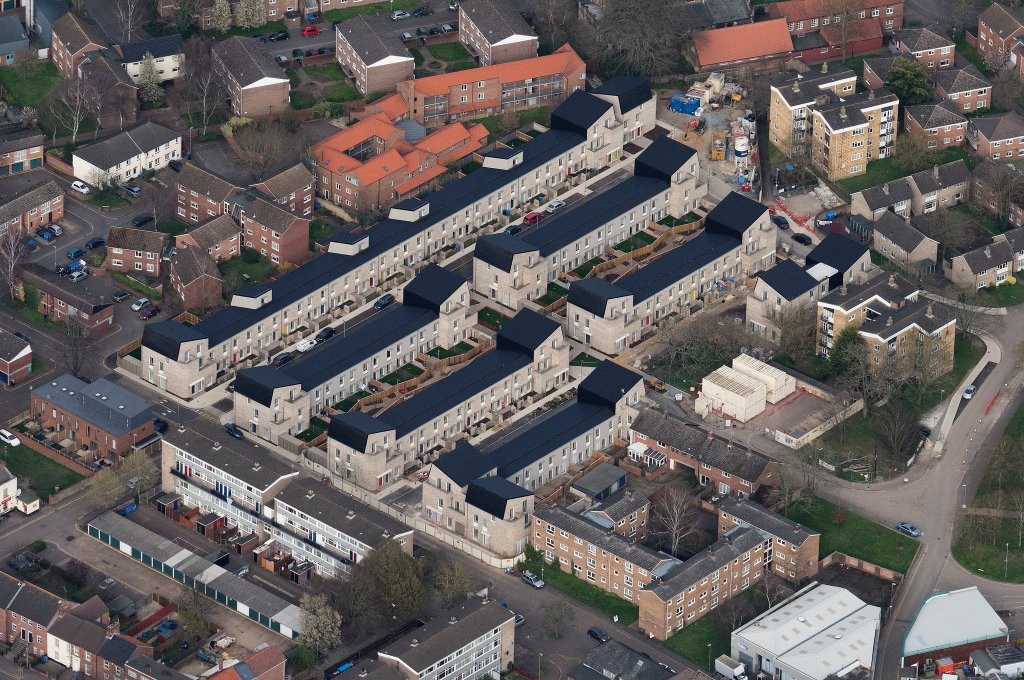
The image above displays an image from an article on a new eco council housing project in Norwich. Goldsmith street combines environmentally friendly living standards with council housing helping to provide homes for thoseliving in poverty. It is an example of how the media focus on the minority success stories instead of focusing on the actual problem. 14 million people live in poverty in the UK and 320,000 of those are homeless. Its a grave problem that more attention must be put on.
This is an example of a social construction of reality in the sense that as a society we are exposed to a very niche kind of media in regards to the homeless which creates stigmas and stereotypes about who they are. Ideals are painted and the rest are disregarded and out of sight out of mind.
An organisation called Home First look at housing the homeless in a different way to the current reward cycle. They look at finding individuals who are been recycled round the system with little reward and house them straight away with the intention of creating incentive with more to lose.
"...So deeply embedded in our psyche we need a whole system change and for everyone to work together. Just one organization doing it won't be enough"
The potential for growth relies heavily on greater support and commitment from the entire public sector. In the long run, small donations and time spent helping the homeless instead of letting the media cloud our minds into believing the problems are going away, in financially beneficial. Repeat addicts and criminals who know nothing else costs the tax payer huge amounts of prison sentences, rehabilitation programs etc. so instead lets help them become competent citizens who contribute like anyone of us and is treated equally and humanely like everyone.
Max Peacock
 Development through the eyes of a developing mind