Be yourself; Everyone else is already taken.
— Oscar Wilde.
This is the first post on my new blog. I’m just getting this new blog going, so stay tuned for more. Subscribe below to get notified when I post new updates.
Be yourself; Everyone else is already taken.
— Oscar Wilde.
This is the first post on my new blog. I’m just getting this new blog going, so stay tuned for more. Subscribe below to get notified when I post new updates.

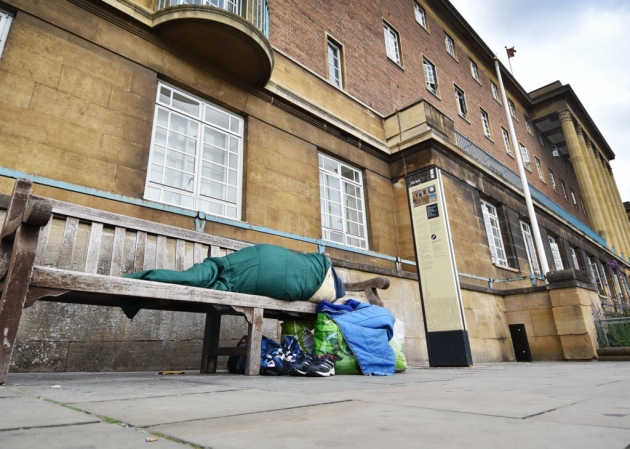
This image shows a homeless man in Norwich sleeping on a bench outside the City Hall in the centre of Norwich with all his belongings in bags next to him. An image that we are very familiar with from the hundreds of different adverts, newspaper articles, social media posts and of course personal experiences, we are reminded of the desperate state the homeless find themselves. The image was coupled with an article by the Norwich Evening News about the attempts of St Martin’s Housing Trust. The article follows a day in the life of a homeless charity and the work they do with regards to trying to reduce the number of people sleeping on the streets. Whilst showing the life saving work they take part in, they are also make reference to the idea, that as a city population, “We’re all just two pay checks away from the streets”.
St Martins state that “they believe that everyone deserves a chance and everyone should be treated with care and dignity” but this attitude is not necessarily shared by everyone due to stigma around homelessness and the pornography of poverty that is exploited in the media .
In a sentence, pornography of poverty is the ‘worst images that exploit the poor for little more than voyeuristic ends’. This essentially says that there are images and media created for peoples enjoyment from seeing the pain and distress in poverty and squalor. People are portrayed as helpless, passive objects in order to elicit a response and hopefully in turn fuel donations and aid. In 2004, a study saw that 5 of Canada’s largest NGO’s raised roughly $300 million (Canadian) in private donations, and this extraordinary numbers are largely due to the powerful images used to touch the hearts of as many as possible. While this may suggest greater efforts towards helping people living in poverty it disregards the fact that these images convey other more destructive messages shaping the public view. The coverage of homelessness and poverty has fuelled ideals that these people are less than human and we create a great systematic divide in distancing ourselves from people, who at the core, are no different than we are. They paint the picture that these development problems can only be solved by the rich and powerful who are creating the ineqaulities in the first place.
The image above highlights perfectly the press’ attempts to portray poverty and homelessness in a negative and un-human way.
"Stereotypical beliefs and outdated images hold a vice-like grip on British understanding of the developing world"
The pornography of poverty creates an un-neutral lens that constructs a reality created by the political and economic elites who hold the most power and control. The photos here are direct examples of the natural sense of normality in the way we view the homeless.
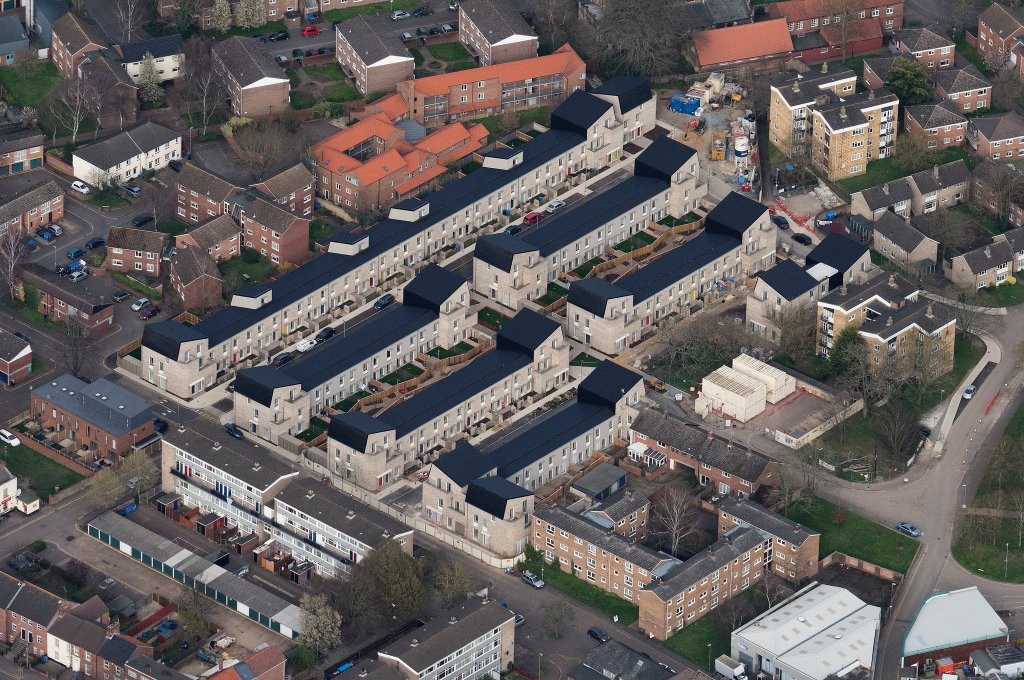
The image above displays an image from an article on a new eco council housing project in Norwich. Goldsmith street combines environmentally friendly living standards with council housing helping to provide homes for thoseliving in poverty. It is an example of how the media focus on the minority success stories instead of focusing on the actual problem. 14 million people live in poverty in the UK and 320,000 of those are homeless. Its a grave problem that more attention must be put on.
This is an example of a social construction of reality in the sense that as a society we are exposed to a very niche kind of media in regards to the homeless which creates stigmas and stereotypes about who they are. Ideals are painted and the rest are disregarded and out of sight out of mind.
An organisation called Home First look at housing the homeless in a different way to the current reward cycle. They look at finding individuals who are been recycled round the system with little reward and house them straight away with the intention of creating incentive with more to lose.
"...So deeply embedded in our psyche we need a whole system change and for everyone to work together. Just one organization doing it won't be enough"
The potential for growth relies heavily on greater support and commitment from the entire public sector. In the long run, small donations and time spent helping the homeless instead of letting the media cloud our minds into believing the problems are going away, in financially beneficial. Repeat addicts and criminals who know nothing else costs the tax payer huge amounts of prison sentences, rehabilitation programs etc. so instead lets help them become competent citizens who contribute like anyone of us and is treated equally and humanely like everyone.
Max Peacock
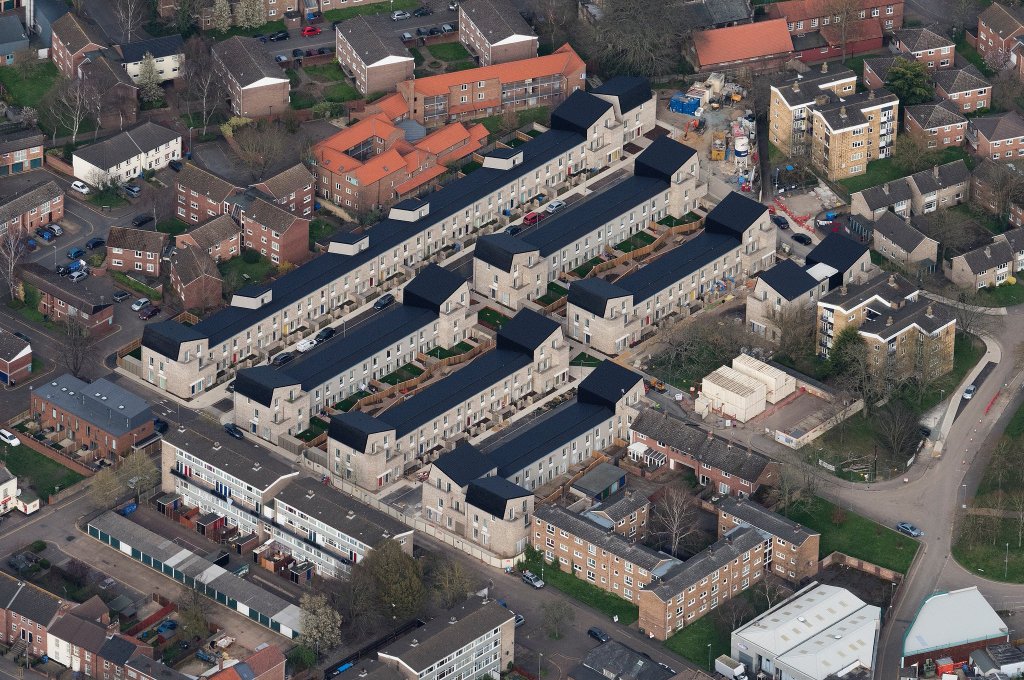
Here we have Goldsmith Street, Norwich, NR2. An eco-friendly social housing project which has seen the construction of 105 brick properties on the city centre outskirts, even going on to win an award for the high quality architecture being built in the most environmentally friendly way possible. Built to the German Passivhaus standards as to ensure the optimum reduction of their ecological footprint. In making these buildings as airtight as possible whilst using ventilation systems throughout, low heating costs among other reduced billing figures offer just one positive of moving into these new homes.
Steering away from regular building standards, the boundaries were pushed as to re-imagine the way we lay out neighbourhoods and to allow more space for families to live and interact healthily. Creating rows of houseswith very easily accessible front and back garden space that is both safe and communal. A 14 meter gap across the street instead of the standard 21 meters, allows for more to be put into one space. However, as the arial view of the project shows us, taking away roads to create traffic and parking congestion, houses are build to host pathways connecting properties as well as safe park and outdoor space without being near noise and danger coming from the roadsBoth physical and mental wellbeing are hugely important aspects of every household despite who its occupants may be. The physical structure of the household will impact health and wellbeing in keeping the space, dry and livable. However, the neighbourhood environemnt and the way we structure our interactivities are hugely vital in encapsulating strong humanitarian communication and improving mental health among communities. We must pay close attentive care in modern times towards how we impact eachothers wellbeing and how can we add structure to our lives to help this. Ensuring every home uses high ceilings, has an outside garden area, as well as quieter traffic, allows every opperunity to provide residents with the nessessary community space to thrive and interact as well as the quaint privacy that we also crave so badly.
One resident of Goldsmiths pointed out the positive impact it has had on her mental health by saying “I’ve got two lovely neighbours and I feel like I want to have people round”
In a study by the European Journal of Public Health, which looked at the effects of regeneration and social cohesion on mental health and saw that it was hugely impactful. The regeneration of Goldsmiths creates an environment where residents have a very good perception of the quality of their neighbourhood and this can allow a sense of belonging to establish and reucude social disorder. Reductions of noise and traffic as well as creating safe areas for children to play reduces anxieties and makes it hugely relaxing for families to enjoy living where they are. These positive emotions will in turn effect families in schools, at work, in relation to work ethics and the general outlook of residents will be far more positive.
This approach to housing is a very new, innovative way of thinking about housing. Focusing not only on the house itself but the lifestyle and wellbeing of the residents living in them.
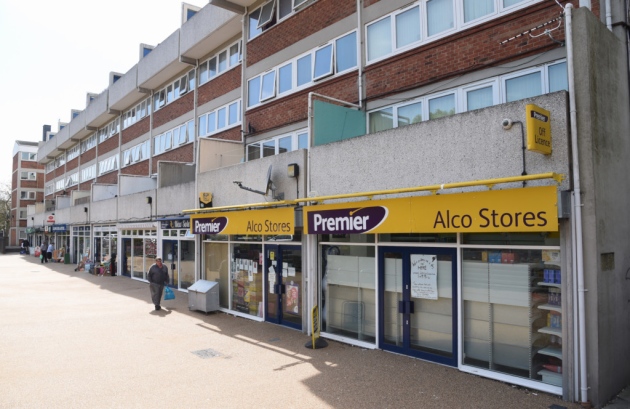
Now we have looked at where Norwich is headed and the potential it has, we can not ignore the fact that there is great deprivation and social instability in many areas of the city. In the least affluent areas of Norwich, 4 in 10 children live in poverty with unemployment 3 times higher than other areas and men typically living 10 years less than in the most affluent. Areas like the photo above highlight that media representation of the rejuivination projects in the city only show a very niche insight into what life is actually like in terms of development in a place like Norwich. The sugar coating of such issues desensitises our human nature to care and hold empathy towards one another, when in fact media representation of development should take a shift to humanise poverty and squalar stricken areas and create conscious flow of knowledge, informing one another not only of the ways we can help, but the sheer scale of the issue we are trying to help. The first image taken from a propaganda type article very unfairly casts aside grave problems of worsening unemployment, a slump in full time earnings as well as growing health concerns. Despite originating in the same city, these two images are used in very different ways to either promote and provide false ideals or to outline that we shouldn’t be so niave to think that what is represented in the media in the way of development is not always nessecarily correct
https://academic.oup.com/eurpub/advance-article/doi/10.1093/eurpub/ckz221/5671760#189543685
This is an example post, originally published as part of Blogging University. Enroll in one of our ten programs, and start your blog right.
You’re going to publish a post today. Don’t worry about how your blog looks. Don’t worry if you haven’t given it a name yet, or you’re feeling overwhelmed. Just click the “New Post” button, and tell us why you’re here.
Why do this?
The post can be short or long, a personal intro to your life or a bloggy mission statement, a manifesto for the future or a simple outline of your the types of things you hope to publish.
To help you get started, here are a few questions:
You’re not locked into any of this; one of the wonderful things about blogs is how they constantly evolve as we learn, grow, and interact with one another — but it’s good to know where and why you started, and articulating your goals may just give you a few other post ideas.
Can’t think how to get started? Just write the first thing that pops into your head. Anne Lamott, author of a book on writing we love, says that you need to give yourself permission to write a “crappy first draft”. Anne makes a great point — just start writing, and worry about editing it later.
When you’re ready to publish, give your post three to five tags that describe your blog’s focus — writing, photography, fiction, parenting, food, cars, movies, sports, whatever. These tags will help others who care about your topics find you in the Reader. Make sure one of the tags is “zerotohero,” so other new bloggers can find you, too.

 Development through the eyes of a developing mind